Course-based clinical reflection.
Note on confidentiality:
The patient name used in this case study is a pseudonym. “Mrs Edward” is not the patient’s real
name and has been used to protect patient confidentiality.
Patient Overview
Mrs Edward is a 65-year-old woman who presented with long-standing discomfort and changes in
the appearance of her lower limbs. She reported that these changes had been present since early
adulthood, with noticeable progression during hormonally significant life stages, particularly
following pregnancy and menopause.
Despite efforts to manage her weight and remain active, she reported that the size, tenderness, and
shape of her legs did not improve, leading to increasing frustration and reduced quality of life.
Relevant Medical History
Mrs Edward has a history of bilateral total knee replacements, performed at separate times. A left
total knee replacement was completed first, followed by a right total knee replacement several
years later. While her post-operative recovery was satisfactory from an orthopaedic perspective,
she continued to experience lower limb heaviness, tenderness, and fatigue that were not directly
attributable to her knee joints.
She reported no history of cardiac, renal, or malignant disease. A family history of similar lower limb
changes in female relatives was noted.
Presenting Concerns
– Persistent pain and tenderness in both legs, particularly with pressure
– A heavy, aching sensation that increased as the day progressed
– Easy bruising with minimal trauma
– Reduced tolerance for prolonged standing and walking
– Emotional distress related to functional limitations and limb appearance
Assessment Findings & Clinical Reasoning
Observation revealed symmetrical enlargement of both lower limbs, extending from the hips to the
ankles, with sparing of the feet. On palpation, the subcutaneous fat was soft and nodular, with
marked tenderness.
Stemmer’s sign was negative. Minimal pitting oedema was observed later in the day but was not a
primary feature. Based on the characteristic tissue distribution, pain, bruising tendency, hormonal
influence, and lack of response to weight-loss strategies, her presentation was consistent with
lipoedema rather than obesity or primary lymphoedema.
The clinical features were in keeping with a Type I–II lipoedema presentation, indicating
early-to-moderate disease changes without established secondary lymphatic failure.
Diagnosis
Mrs Edward was diagnosed with lipoedema affecting both lower limbs, consistent with a Type I–II
stage. At the time of assessment, there were no clinical signs of secondary lymphoedema, although
ongoing monitoring was recommended due to age and previous orthopaedic surgery.
Intervention & Management Approach
Management focused on symptom control, education, and long-term self-management, rather than
fat reduction.
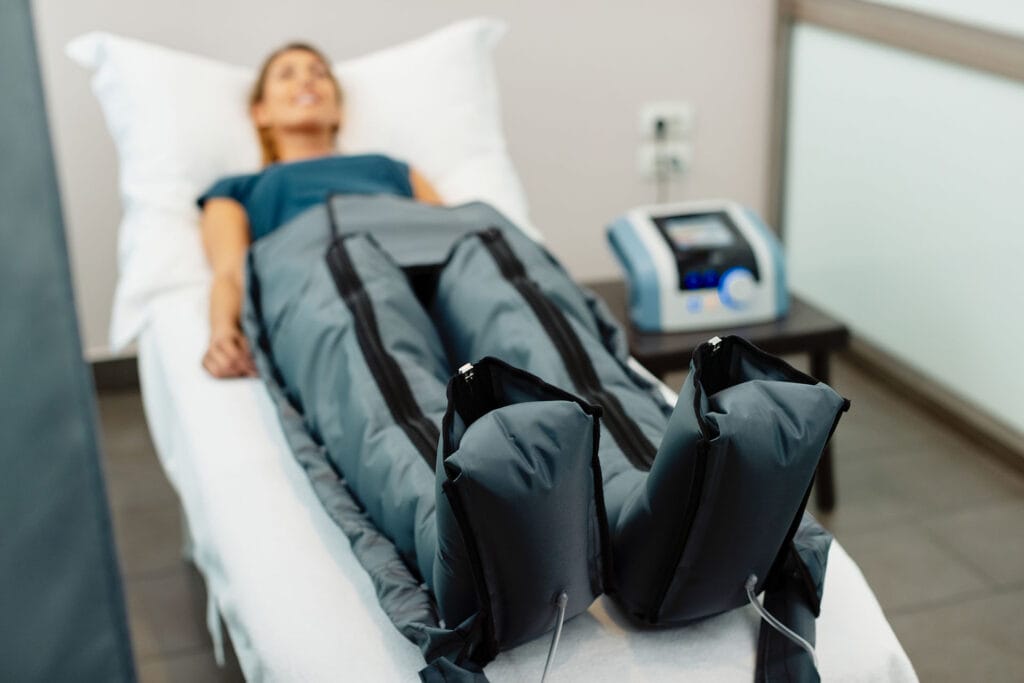
The treatment plan included manual lymphatic drainage, compression therapy, education on pacing
and skin care, gentle low-impact exercise, and discussion around inflammation and lifestyle factors
rather than weight loss.
As part of her compression management, Mrs Edward was supplied with Verisan Lipocare Class 2
(Strong) pantyhose. She reported that she was very happy with the garment, describing improved
comfort and a noticeable reduction in leg heaviness and tenderness when worn consistently. The
compression garment was well tolerated and contributed positively to her overall symptom
management.
Outcome & Reflection
Following treatment, Mrs Edward reported a reduction in lower limb pain and heaviness, particularly
later in the day. She noted that the combination of manual therapy, education, and consistent use of
compression significantly improved her ability to manage daily activities and enhanced her
confidence in self-management.
This case reinforced the importance of recognising lipoedema at earlier stages, even in older
patients, and highlighted the value of appropriate compression selection. Completing the lipoedema
course improved my clinical confidence in assessment, staging, patient education, and
conservative management strategies.
Learning Points
– Lipoedema can remain under-recognised despite long-standing symptoms
– Accurate staging supports appropriate and realistic management goals
– Compression therapy plays a central role in symptom control
– Education and validation are essential components of effective care
Proper management of Lipoedema and Lymphoedema symptoms can add significant value and relief to patients with these conditions, at NSA Physio we offer comprehensive treatment options for both conditions. Schedule an appointment if you would like a assessment and a structured treatment plan.